
English| EUR
Suggested for you
More currencies
Choose a language
Uzbekistan sits at the crossroads of ancient trade routes, offering travelers access to some of Central Asia's most intact Islamic architecture and living history. This guide examines what the country delivers to visitors in 2026, from logistical realities to the experiences that justify the trip.
Quick answer
Uzbekistan is worth visiting for travelers seeking architectural grandeur, cultural depth, and logistical ease in Central Asia. The country offers visa-free entry for many nationalities, affordable travel costs averaging 30-50 USD daily, and world-class Silk Road heritage sites in Samarkand, Bukhara, and Khiva. Most visitors spend 7-10 days exploring the historic cities, with optional extensions to the Fergana Valley or Aral Sea region.
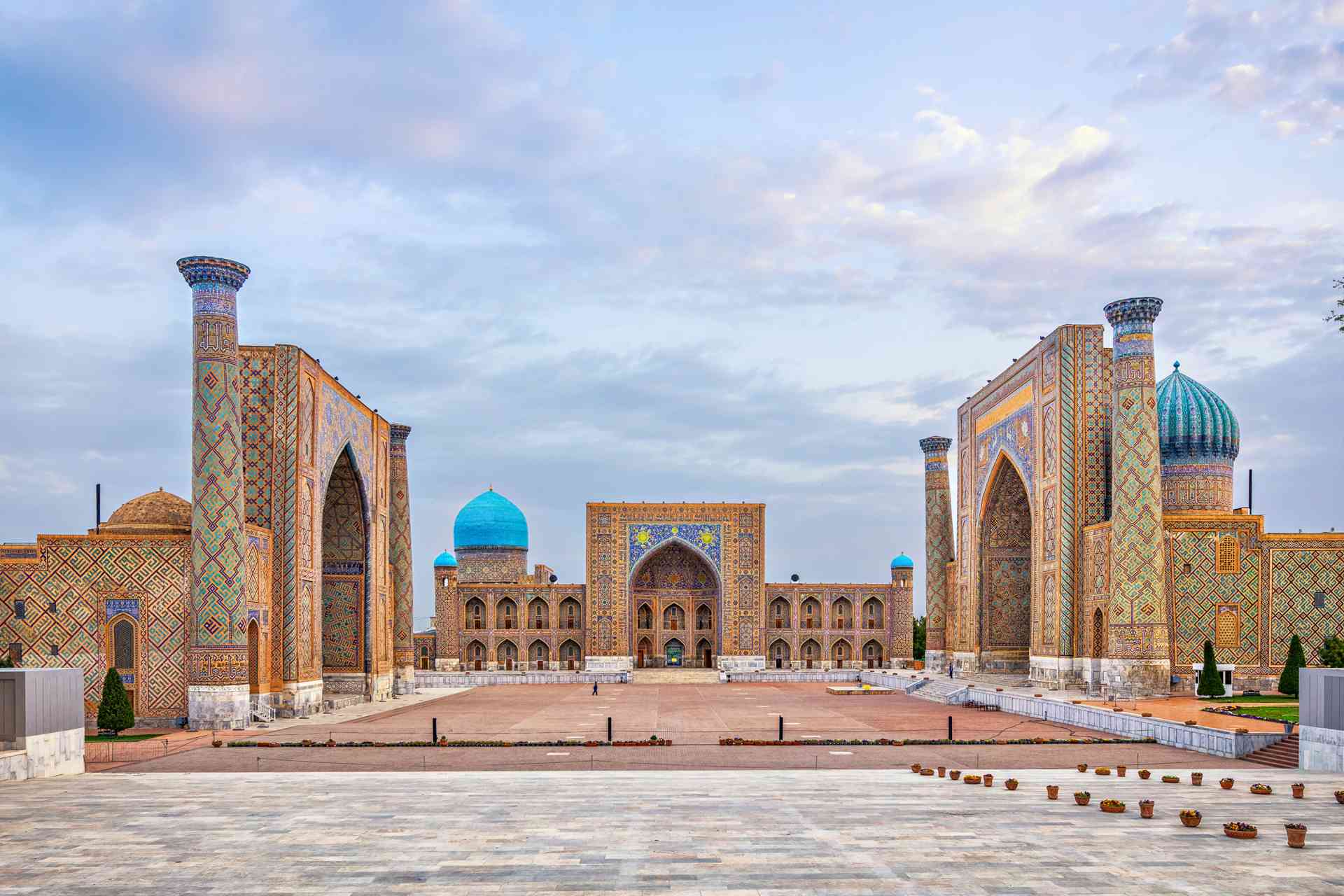
Uzbekistan opened its borders to simplified travel in 2018, removing visa requirements for over seventy countries and modernizing its tourism infrastructure at a pace unmatched elsewhere in Central Asia. The result is a destination that combines the region's most spectacular monuments with the practical comforts of functioning ATMs, reliable transport, and a growing network of guesthouses. The architectural heritage is the primary draw. Samarkand's Registan Square, Bukhara's old city, and Khiva's walled Itchan Kala represent the most complete ensemble of Islamic monumental architecture outside Iran. These are not reconstructions but working madrasas, mosques, and mausoleums built between the 14th and 17th centuries, faced in turquoise tilework and geometric mosaics that remain largely intact. The scale is immediate—tilework panels that stretch three stories, portal arches wide enough to frame entire courtyards, drum towers that anchor city skylines. Beyond the monuments, the country operates on a scale that rewards slow travel. Distances between cities are manageable by train or shared taxi, local meals cost 3-5 USD, and the cultural context—craft workshops, functioning bazaars, family-run teahouses—is accessible without a fixer. The language barrier exists but is navigable; English is common among younger residents in tourist zones, and Russian serves as a regional lingua franca. The question of whether Uzbekistan is worth visiting ultimately depends on what you value in travel. If your priority is Silk Road history made tangible, ease of movement within a formerly closed region, or immersion in a culture shaped by Persian, Turkic, and Soviet influences, the answer is unambiguous. The infrastructure supports independent travel, the monuments justify the journey, and the rhythm of daily life—morning markets, afternoon shade, evening promenades—provides the texture that guidebook lists cannot. For travelers already committed to a Central Asia itinerary, Uzbekistan functions as both anchor and gateway. It pairs naturally with Turkmenistan for contrast, offers a gentler introduction to the region than Kazakhstan's steppe distances, and delivers concentrated experiences in a compact timeframe.
“The architectural heritage is not reconstruction but working monuments built between the 14th and 17th centuries, faced in turquoise tilework that remains largely intact.”
Choosing between Uzbekistan and Turkmenistan depends on whether you seek dense historical architecture or remote, off-road desert exploration. Uzbekistan offers established Silk Road infrastructure, while Turkmenistan provides isolated, landscape-driven experiences.
| Uzbekistan Turkmenistan Recommended | Cultural Heritage Desert Landscapes | |
|---|---|---|
| Focus | Silk Road History and Architecture | Remote Geography and Archaeology |
| Primary Sights | Samarkand, Bukhara, Khiva | Darvaza Gas Crater, Merv, Ashgabat |
| Travel Infrastructure | Extensive rail and domestic flights | Limited, requires guided transit |
| Accessibility | Visa-free or e-visa for many | Requires letter of invitation and visa |
| Typical Trip Duration | 7-14 days | 3-7 days |
Verdict: Travelers prioritizing accessible cultural immersion should select Uzbekistan, while those seeking isolated, high-adventure desert travel should prioritize Turkmenistan.
Most travelers enter Uzbekistan first, spending 5–7 days exploring Samarkand, Bukhara, and Khiva before crossing into Turkmenistan. This順序 allows you to handle the simpler Uzbek e-visa process first, then use a Turkmen transit or tourist visa to complete the loop through Ashgabat and the Karakum Desert.
Fly into Tashkent, spend a day acclimatizing, then take the high-speed train to Samarkand to visit Registan Square and Shah-i-Zinda. Budget three nights to cover the highlights without rushing.
Travel west by train or shared taxi to Bukhara, where you can walk the Ark Fortress, Lyab-i Hauz plaza, and surrounding madrassas. Two full days give you time to explore the trading domes and sample local plov.
Continue to Khiva in the morning, tour the Ichan-Kala walled city in the afternoon, and confirm your Turkmen visa is ready for the next day's crossing at Shavat–Dashoguz.
Enter at the northern border, drive or fly to Ashgabat, and arrange your Darvaza Crater tour through a registered agency—typically a night departure with return the following morning.
Depart Ashgabat mid-afternoon, reach the crater by sunset, and watch the flames intensify after dark. Most tours include a simple camp dinner and return to the capital by dawn.
Spend your final morning visiting the National Museum or Independence Monument, then catch an evening flight onward or back to Tashkent to close the circuit.
The optimal window for visiting Uzbekistan and Turkmenistan spans spring (April to May) and autumn (September to October). These months offer mild temperatures, making the desert environment of the Karakum more manageable for travel.
15°C to 28°C; mild days.
Ideal for outdoor sightseeing and desert excursions before peak summer heat arrives.
12°C to 25°C; clear skies.
Cooler evenings make this season preferred for overnight stays near the Darvaza Gas Crater.
30°C to 45°C; extreme heat.
High temperatures restrict daytime activity, particularly in the desert regions.
0°C to 10°C; cold and windy.
Temperatures can drop significantly, requiring specialized gear for desert travel.
Verdict: April, May, September, or October provide the most temperate climate conditions for exploring the region.
The Darvaza Gas Crater is located in the Karakum Desert, Turkmenistan, and is most accessible by 4x4 vehicle from Ashgabat or Dashoguz. Overland travel requires navigating specific border checkpoints, as direct public transport between Uzbekistan and this remote site is not available.
A36 Highway via Ashgabat
Private transfer from Dashoguz
Border crossing at Shavat-Dashoguz
Plan your travel to reach the site during the best arrival window: 17:00–20:00. This timing allows you to witness the crater's glow at twilight and sunset.
Both Uzbekistan and Turkmenistan require advance documentation, with Turkmenistan mandating a sponsored tour and Letter of Invitation before any visa application can proceed.
Everything you need to know about is uzbekistan worth visiting
Travelers often find that combining these nations provides a complete Silk Road experience, making the question of is Uzbekistan worth visiting highly relevant for cross-border itineraries. Each country offers distinct architectural styles and cultural histories that complement one another well.
When evaluating if is Uzbekistan worth visiting, consider linking your trip with Turkmenistan to see both the ancient desert fortresses and the ornate Soviet-era marble buildings of Ashgabat. Logistics are best managed through organized tours that coordinate the necessary regional permits.
To witness the glow of the Darvaza Gas Crater in the Karakum Desert, arrive between 17:00 and 20:00 for the optimal view. This window allows you to experience the site as twilight fades and the desert landscape transitions into night.
For those asking if is Uzbekistan worth visiting, adding Turkmenistan provides a deeper layer of Central Asian history, including UNESCO-recognized sites like Merv and Kunya-Urgench. The contrast between the two nations highlights the diverse heritage of the region.
Access to remote locations like the Karakum Desert necessitates specialized local permits and an experienced guide. Always ensure your travel documentation is secured well before your departure date to avoid logistical delays.
Deciding if is Uzbekistan worth visiting depends on your interest in Islamic architecture, vibrant bazaars, and traditional craftsmanship. The country serves as the heart of the ancient trade routes, offering a wealth of preserved historical landmarks.
The transition from summer to autumn provides more manageable temperatures for desert excursions and city explorations. Planning your visit outside the peak heat of August ensures a more comfortable experience across the region.
Travelers frequently conclude that yes, is Uzbekistan worth visiting, especially when paired with the unique, isolated atmosphere found in Turkmenistan. Combining these destinations creates a comprehensive loop that covers the most significant highlights of the Silk Road.
Uzbekistan Tour Cost & Budgeting
Read more GuideWhat Airlines Fly to Turkmenistan
Read more Tickets & toursTurkmenistan Group Tours from Uzbekistan
Read more GuideIs Tashkent Worth Visiting?
Read more GuideIs Turkmenistan Worth Visiting?
Read more Tickets & toursTurkmenistan Tour from Tashkent
Read more Tickets & toursUzbekistan, Tajikistan & Turkmenistan Tours
Read more GuideUzbekistan to Turkmenistan Train Travel
Read more