
96 hr
Turkmenistan Discovery: Darwaza Crater & Ancient Silk Road Cities
Four-day expedition through Turkmenistan's legendary sites, from the blazing Door to Hell to marble Ashgabat
Reserve
Hand-picked by our editors — only the best 5 expeditions from 42 reviewed.
Verified partners for every tour, free cancellation where available, and instant confirmation on every booking.
96 hr
Four-day expedition through Turkmenistan's legendary sites, from the blazing Door to Hell to marble Ashgabat
Reserve
96 hr
Camp beside the blazing Darvaza Crater, explore UNESCO-listed Merv, and tour Ashgabat's marble monuments
Reserve
96 hr
Journey from blazing desert craters to marble cities and UNESCO Silk Road sites with expert guides
ReservePrices from verified partners. Availability updates in real time at checkout. Free cancellation policies apply where shown.
The landmarks, rooms, and views travelers on this tour remember — all visible on a single visit.
A massive 70-meter wide fiery pit that has been burning continuously since 1971. The crater creates a surreal glow visible for miles in the dark desert.
A nearby site where pressurized natural gas creates bubbling pools of liquid mud. It provides a fascinating look at the geological activity of the Karakum region.
A secondary volcanic depression filled with clear, gas-bubbling water. It is a quiet and haunting contrast to the nearby roaring flame pit.
The vast, arid landscape covering most of Turkmenistan that defines the journey to the crater. It is home to unique flora and nomadic shepherd camps.
A traditional desert settlement often used as a rest stop during the trek to the crater. It offers a glimpse into local nomadic life in the desert.
The Darwaza Crater offers a visceral encounter with geological forces, while Merv provides a profound connection to the Silk Road past; choosing between them depends on whether you prefer natural spectacle or human antiquity.
| Feature | Top pick Darwaza Gas Crater | Merv Archaeological Park |
|---|---|---|
Primary Focus |
Natural phenomenon | Historical archaeology |
Terrain |
Sandy desert basin | Flat, arid ruins |
Best Time to Visit |
17:00–20:00 | Early morning or late afternoon |
Physical Demand |
Moderate dune walking | Extensive walking across ruins |
Photography Potential |
High; night fire contrast | High; wide-angle structures |
| See tickets → |
Verdict: Travelers prioritizing evening illumination often select a turkmenistan group tour from uzbekistan, whereas those seeking architectural context favor the vast cultural landscape of the Merv ruins.
Choose your ticket, select your date, and reserve in under two minutes. Secure checkout handled by our verified partner.
Instant confirmation by email, with a mobile voucher you can save offline. No printing, no queuing at a collection desk.
Arrive at the entrance, show your voucher on your phone, and walk in. Most tickets include priority or skip-the-line access.
Practical details for your visit straight from our verified partners — hours, access, rules, and how to get there.
Dress in light, breathable layers to manage the intense desert heat and UV exposure. Sturdy footwear is essential for walking on the sandy, uneven terrain surrounding the crater rim during your turkmenistan group tour from uzbekistan.
Travelers on a turkmenistan group tour from uzbekistan are advised to keep personal belongings secure inside the tour vehicle. Security checkpoints are standard when traveling between the Uzbek border and the desert site.
The turkmenistan group tour from uzbekistan provides excellent opportunities for night photography of the flames. Ensure you have extra batteries as desert temperatures can drain power quickly.
The terrain around the Darvaza Gas Crater is natural, unpaved sand and requires navigating loose slopes. Visitors on a turkmenistan group tour from uzbekistan should consult their operator regarding physical requirements for the short walk to the rim.
Families should maintain close supervision as there are no perimeter railings at the crater edge. A turkmenistan group tour from uzbekistan is recommended for older children who can handle the long desert drive.
Your turkmenistan group tour from uzbekistan typically includes campfire meals or pre-packed rations. Carrying a personal supply of bottled water is critical in the Karakum Desert climate.
Best time to go, insider tips, nearby landmarks, and the cancellation fine print — flip through to skim what matters to you.
Flexible, no hidden fees.
Full refunds are available for cancellations made at least 24 hours in advance. This includes all elements of your turkmenistan group tour from uzbekistan booking, including the 0 USD entrance fee portion.
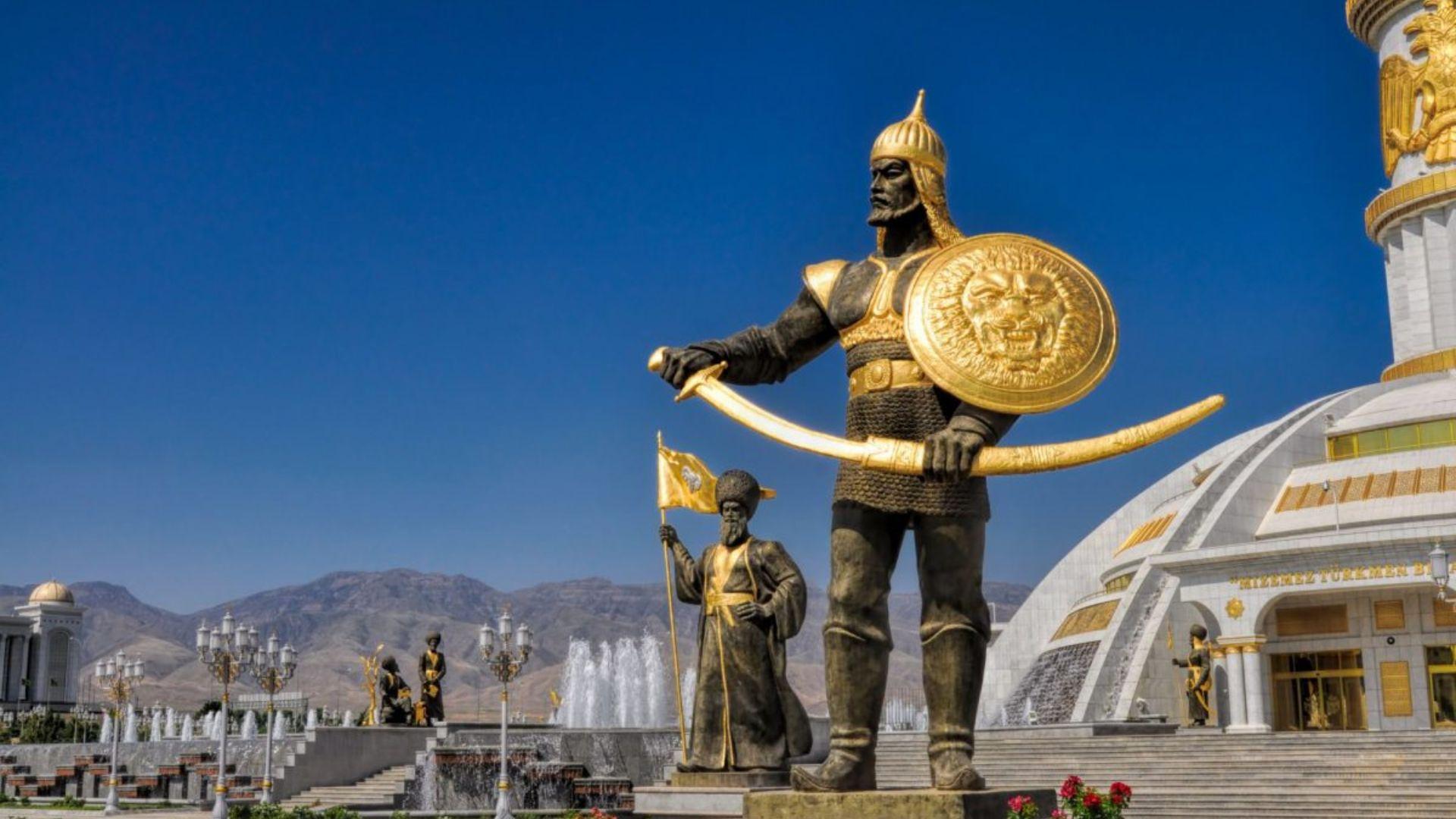
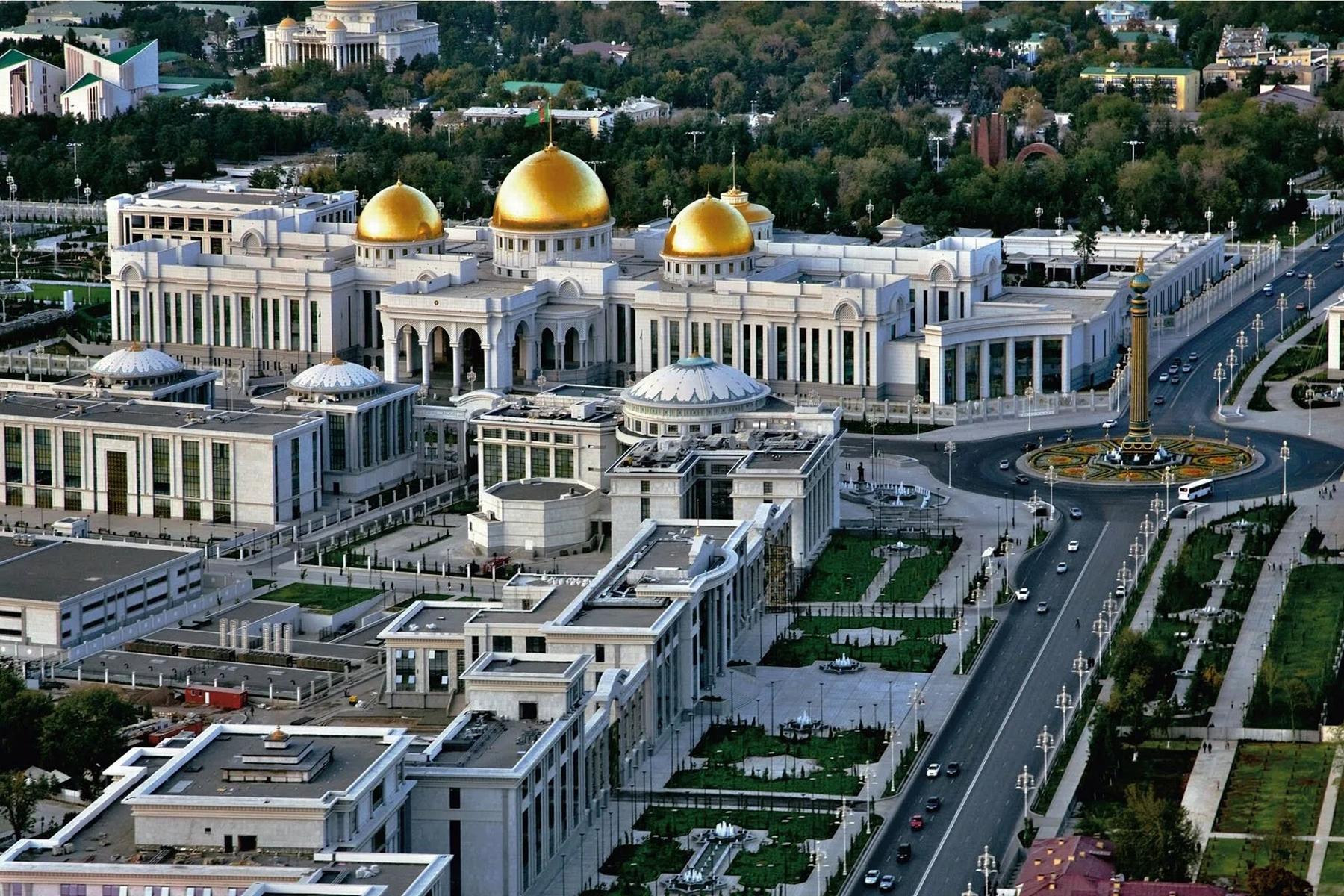
Turkmenistan remained closed to independent travelers until 2016, when the government began issuing five-day transit visas for overland crossings from Uzbekistan. The route follows a Silk Road corridor older than the modern border: caravans moving between Khiva and Merv crossed the same Karakum sands for fifteen centuries, pausing at the oasis wells that now mark the highway rest stops between Dashoguz and Ashgabat. Today's cross-border expeditions compress that journey into four days, threading visa logistics, fuel permits, and crater access into a single itinerary that would take weeks to arrange independently. The Darvaza gas crater anchors every Turkmenistan group tour from Uzbekistan. Soviet geologists punctured a methane pocket in 1971; the ground collapsed into a seventy-metre-wide sinkhole, and engineers set the escaping gas alight to prevent poisoning. The fire has burned for fifty-five years. No road reaches the site—convoy vehicles leave the M37 highway at the Erbent junction and drive forty-two kilometres across open desert, arriving at the crater rim after sunset when the flames are visible from three kilometres away. Groups camp in yurts within sight of the firelight; temperature differentials between the burning crater and the surrounding steppe generate winds strong enough to carry sparks across the sand. Ashgabat holds the Guinness record for the highest concentration of white marble buildings: 543 structures clad in 4.5 million square metres of stone quarried in the Kopet Dag mountains. The capital's reconstruction began in 2000 under President Niyazov, who commissioned Italian and Turkish firms to build ministries, museums, and apartment blocks in a uniform neoclassical idiom. The result is a city of empty boulevards and gold-domed palaces, maintained by a nightly cleaning fleet and populated by fewer than one million residents. The National Museum of History displays artefacts from Merv and Nisa, including Parthian rhytons and Seljuk ceramics that cannot be photographed—guards monitor every gallery. Merv served as the capital of the Seljuk Empire in the twelfth century, when it rivalled Baghdad and Cairo in population. Mongol forces under Tolui Khan destroyed the city in 1221, diverting the Murgab River and massacring an estimated 700,000 inhabitants. The ruins sprawl across 1,200 hectares of the Mary Province desert: the walls of Sultan Sanjar's mausoleum still stand thirty-eight metres tall, its turquoise dome visible from the road that bisects the archaeological zone. Excavations by the International Merv Project uncovered a Zoroastrian fire temple beneath the Islamic-era mosque, confirming continuous settlement from the sixth century BC. Guided tours of the site last three hours; shade structures exist only at the visitor centre. Kunya Urgench, the medieval capital of Khwarezm, lies thirty kilometres south of the Uzbek border. Its Turabek Khanum mausoleum preserves the finest surviving example of Khwarezmian mosaic tilework: geometric patterns in cobalt, turquoise, and white faience cover the interior dome in a design that predates the Timurid style by a century. The site receives fewer than 5,000 visitors annually—most Turkmenistan group tour from Uzbekistan itineraries allocate two hours here on the return crossing, pausing between the Kutlug Timur minaret and the border checkpoint at Shavat.
"Soviet geologists set the escaping gas alight in 1971 to prevent poisoning—the fire has burned for fifty-five years."
A step-by-step walkthrough of the visit — what you'll see, how long each stage takes, and the details that matter.
You cross the Turkmen border at Shavat in the early morning, passport and visa photographed twice before the convoy regroups on the south side of the checkpoint. The drive to Kunya Urgench takes forty minutes across flat cotton fields; your guide unlocks the gate to the Turabek Khanum mausoleum and you step into a domed chamber where twelfth-century mosaic tiles still catch the light in cobalt and turquoise bands. The minaret of Kutlug Timur rises sixty metres beside the tomb—you count the spiral of brickwork that climbs the exterior, each course a slightly different terra cotta shade. Ashgabat appears after a five-hour drive south, white marble facades lining both sides of a boulevard wide enough for twelve lanes. You walk through the National Museum's Parthian gallery, stopping at a display case holding a two-thousand-year-old ivory rhyton carved in the shape of a griffin; no cameras are permitted and a guard follows three paces behind. That evening the convoy leaves the capital for the desert, headlights tracking the highway until the Erbent turn-off, then crossing open sand in low gear. You reach the Darvaza crater rim at dusk—the flames roar loud enough that conversation requires raised voices, and the heat is tangible at ten metres. You sleep in a yurt with the firelight visible through the door frame, waking once in the night to see sparks drifting over the steppe like burning insects.
The Darvaza Gas Crater is open 24 hours a day, allowing visitors to view the flames at any time.
There is a 0 USD entrance fee for the site, as costs are covered by your mandatory turkmenistan group tour from uzbekistan package.
Yes, you can book official turkmenistan group tour from uzbekistan tickets through certified local travel agencies.
The site features uneven desert terrain and no paved paths, so participants of a turkmenistan group tour from uzbekistan should be prepared for light hiking.
The best arrival window is 17:00–20:00 to ensure optimal visibility of the flames against the desert night sky.
Yes, photography is encouraged at the Darvaza Gas Crater, especially during the low-light hours.
Yes, a visa and a Letter of Invitation are mandatory for all travelers on a turkmenistan group tour from uzbekistan.
Pack plenty of water, sunscreen, a hat, and sturdy shoes for your turkmenistan group tour from uzbekistan adventure.
Many travelers combine their trip with visits to the ancient architectural monuments of Konye-Urgench.